Source CE Certified Self Priming Diaphragm Pump for Water Transfer, Chemical Dosing, and Irrigation
Compare 30 CE certified self priming diaphragm pump models from verified suppliers. Evaluate stainless steel and PPS options with varying flow rates and suction lifts for industrial water transfer, chemical dosing, and irrigation applications.
Key considerations
Products List




Comprehensive Sourcing Guide
Strategic Sourcing Guide for CE Certified Self-Priming Diaphragm Pumps
Procuring industrial fluid handling equipment requires a rigorous approach to technical verification, regulatory compliance, and supplier reliability. When the core keyword focuses on a CE certified self-priming diaphragm pump, buyers must navigate a landscape where performance metrics vary significantly across different models and manufacturers. The following guide outlines the essential factors for sourcing these units, drawing strictly from observed product attributes and established industry standards to ensure a procurement strategy that minimizes risk and maximizes operational efficiency.
Technical Specifications and Performance Variability
Understanding the technical specifications of self-priming diaphragm pumps is the first step in defining a viable procurement scope. The observed product data reveals a wide spectrum of capabilities, indicating that a single "one-size-fits-all" solution does not exist. Buyers must carefully distinguish between models based on their specific flow rate and suction lift requirements. For instance, observed data indicates models with a maximum flow rate of 587 liters per minute, while other configurations offer a capacity of 157 liters per minute or as low as 57 liters per minute. Similarly, the maximum suction lift varies; some units are rated for a dry lift of 5 meters and a wet lift of 8 meters, whereas others are specified for a dry lift of 4 meters and a wet lift of 7.6 meters or 8 meters.
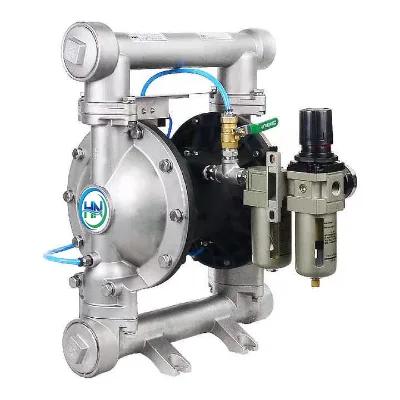
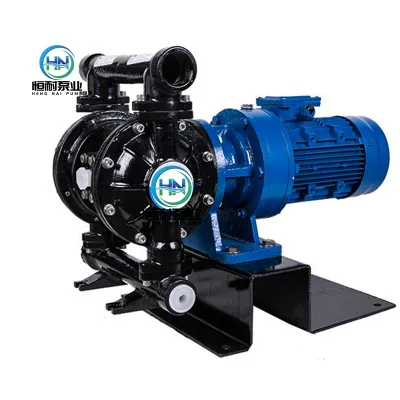
The construction material is another critical differentiator. Stainless steel is a prevalent material choice for the valve body and diaphragm, offering corrosion resistance and durability in demanding environments. However, aluminum alloy and PPS (Polyphenylene Sulfide) are also observed in specific model configurations, suggesting suitability for different chemical compatibilities or weight constraints. The driving type further influences selection; while some units are pneumatic, others utilize a motor-driven mechanism. The motor-driven variants often feature a horizontal pump shaft position and single-stage impellers with an open design, which can impact the pump's ability to handle solids or viscous fluids.
Furthermore, the operational envelope is defined by specific thermal and duty constraints. Units are observed to operate at working temperatures up to 80 degrees Celsius and are designed for continuous duty work, capable of running a whole day without interruption. Noise levels are a significant consideration for indoor or residential-adjacent applications, with some specifications noting performance below 40dB at a distance of 1 meter. The maximum head pressure, observed at 84 meters in certain high-performance models, dictates the vertical lift capability required for the intended application.
Compliance and Certification Verification
The requirement for CE certification is a non-negotiable baseline for many international markets, particularly within the European Union. The observed product data explicitly lists CE alongside ISO9001 and RoHS certifications for various models. However, buyers must treat these certifications as observations of specific listings rather than universal guarantees for every unit in a category. The certification string often includes specific material or functional qualifiers, such as "CE, ISO9001: Diaphragm Material: FPM" or "CE, RoHS, ISO9001: Function: Electronic Type." This suggests that certification may be tied to specific configurations or material compositions.
When verifying compliance, procurement teams should request the specific Declaration of Conformity (DoC) for the exact model number being purchased. The presence of ISO9001 indicates a quality management system, but it does not guarantee the performance of the specific pump unit without supporting test reports. Similarly, RoHS compliance is crucial for electronic components, ensuring the absence of restricted hazardous substances. Buyers should verify that the certification covers the specific version of the product, as a pneumatic diaphragm pump may have different certification requirements compared to a motor-driven electronic type. The "Explosion" performance attribute observed in some listings warrants special attention; if the application involves flammable fluids or gases, the pump must meet specific ATEX or similar explosion-proof standards, which should be explicitly confirmed in the documentation rather than assumed from general "Explosion" performance labels.
Cost Drivers and Pricing Structure
The pricing for CE certified self-priming diaphragm pumps is influenced by a complex interplay of materials, power sources, and performance capabilities. The observed price range spans from 16.5 USD to 3500 USD, a variance that reflects the diversity in specifications. Lower-priced units typically correspond to smaller flow rates, simpler materials like aluminum alloy, or basic pneumatic configurations. Conversely, the upper end of the price spectrum likely correlates with high-flow stainless steel models, motor-driven systems with advanced electronic controls, or units with specialized certifications and customizations.
Minimum Order Quantity (MOQ) is another significant cost driver, with observed ranges from 1 to 100 units. Buyers seeking small batches may face higher per-unit costs or limited model availability, whereas bulk procurement can unlock economies of scale. Customization is listed as an available attribute, which invariably adds to the cost and lead time. The choice of material, such as upgrading from aluminum to stainless steel or selecting FPM diaphragms over standard rubber, will directly impact the final price. Additionally, the packaging specifications, ranging from standard export cartons to specific dimensions like 473566 cm, affect shipping costs. Buyers should factor in the net weight, which varies from lighter units to those weighing 29kg, as this influences freight charges.
Typical Applications and Operational Context
The versatility of self-priming diaphragm pumps allows them to serve a broad array of industrial and commercial applications. The "Pump, Pumps, Circulating Pump" usage classification suggests their utility in fluid transfer, recirculation loops, and general industrial processing. The high maximum head of 84 meters makes certain models suitable for high-pressure transfer tasks, while the self-priming capability is essential for applications where the pump is located above the fluid source.
The specific material composition dictates the application environment. Stainless steel models are ideal for food processing, pharmaceutical, or chemical applications where hygiene and corrosion resistance are paramount. Aluminum alloy or PPS models might be preferred for lighter-duty tasks or where weight is a critical factor. The low noise profile of certain motor-driven units makes them suitable for environments where operator comfort is a priority, such as in maintenance workshops or near office spaces. The ability to operate continuously for long durations supports applications requiring 24/7 operation, such as wastewater management or continuous chemical dosing. However, the "Explosion" performance attribute implies a specialized use case, likely in hazardous environments where spark-free operation or containment is required.
Supplier Evaluation and Customization Capabilities
Evaluating a supplier for these pumps requires a focus on their ability to provide accurate technical data and adhere to the observed product attributes. The data indicates that suppliers offer customization, which is a valuable service for buyers with unique requirements. However, buyers must ensure that the supplier can validate that customizations do not compromise the CE certification or other safety standards. The origin of the products, observed as Shanghai, China, and Dongguan, China, suggests a concentration of manufacturing in these regions. While this provides access to a robust supply chain, buyers should verify the specific factory capabilities and quality control processes.
When assessing suppliers, request detailed product data sheets that match the observed specifications, such as the exact model numbers (e.g., HY50-SS, HY25-SS, HY15-PP) and their corresponding standards (e.g., 2'' caliber, 1.5'' caliber, 1/2'' caliber). The presence of specific package sizes and net weights in the supplier's documentation is a good indicator of their attention to detail. Buyers should also inquire about the supplier's experience with the specific certifications listed, ensuring they can provide the necessary documentation for customs clearance and regulatory compliance. The ability to support OEM (Original Equipment Manufacturer) requests is another key factor, indicating a supplier's flexibility in integrating the pump into larger systems or branding it for specific clients.
Quality Control and Long-Term Procurement Considerations
Ensuring long-term reliability requires a proactive approach to quality control. The observed attribute of "No Leak" performance is a critical quality metric that should be verified through testing or third-party inspection. Buyers should request evidence of leak testing procedures, especially for high-pressure applications where failure could result in significant downtime or safety hazards. The "Long Life" attribute, citing over 30,000 hours of operation, is a significant selling point, but it should be understood as a design target rather than a guaranteed lifespan without proper maintenance.
For long-term procurement, consider the availability of spare parts, particularly the diaphragm material (FPM) and impeller components. The standard caliber sizes (2'', 1.5'', 1/2'') suggest a modular approach, but buyers should confirm the interchangeability of parts across different models. The duty cycle capability, allowing for continuous operation, implies that the pump is built for durability, but regular maintenance schedules should be established to maintain performance. Finally, buyers should monitor the lead times and production capacity of the supplier, as the observed MOQ ranges and customization options can impact delivery schedules. Establishing a clear communication channel for technical support and warranty claims is essential for mitigating risks associated with long-term equipment usage.
Summary of Key Selection Criteria
To summarize the procurement strategy, buyers must align their specific operational needs with the diverse technical specifications available in the market. The decision matrix should prioritize the required flow rate, suction lift, and material compatibility over price alone. Certification verification is paramount, ensuring that the CE mark and associated ISO standards are valid for the specific model configuration. By focusing on suppliers who provide transparent data, offer customization without compromising safety, and demonstrate a commitment to quality control, buyers can secure reliable self-priming diaphragm pumps that meet both immediate and long-term operational goals. The wide range of observed models, from 57 L/min to 587 L/min and varying in material from aluminum to stainless steel, underscores the importance of a detailed, evidence-based selection process to avoid mismatches between equipment capabilities and application requirements.
FAQs
What certifications do these pumps hold?
The pumps hold CE, ISO9001, and RoHS certifications. These marks often specify material types like FPM diaphragms or electronic functions, so verify the exact model's Declaration of Conformity for compliance.
How much suction lift can the pump achieve?
Maximum suction lift varies by model, ranging from dry 4 meters to dry 5 meters, with wet lifts up to 8 meters. Select a unit based on your specific lift requirements and fluid conditions.
What materials are used for the pump body?
Common materials include stainless steel, aluminum alloy, and PPS. Stainless steel offers high corrosion resistance, while aluminum and PPS provide lighter weight options for specific chemical or weight constraints.
Can the pump operate continuously without failure?
Yes, the pumps are designed for continuous duty work and can run a whole day. They feature a long life expectancy of over 30,000 hours with working temperatures up to 80 degrees Celsius.
What is the price range for these units?
Prices range from 16.5 USD to 3500 USD depending on specifications. Higher costs typically reflect larger flow rates, stainless steel construction, or motor-driven electronic configurations compared to basic pneumatic models.
Is customization available for these pumps?
Customization is available for specific buyer requirements. This service may affect the minimum order quantity and lead time, so confirm details with the supplier before placing an order.